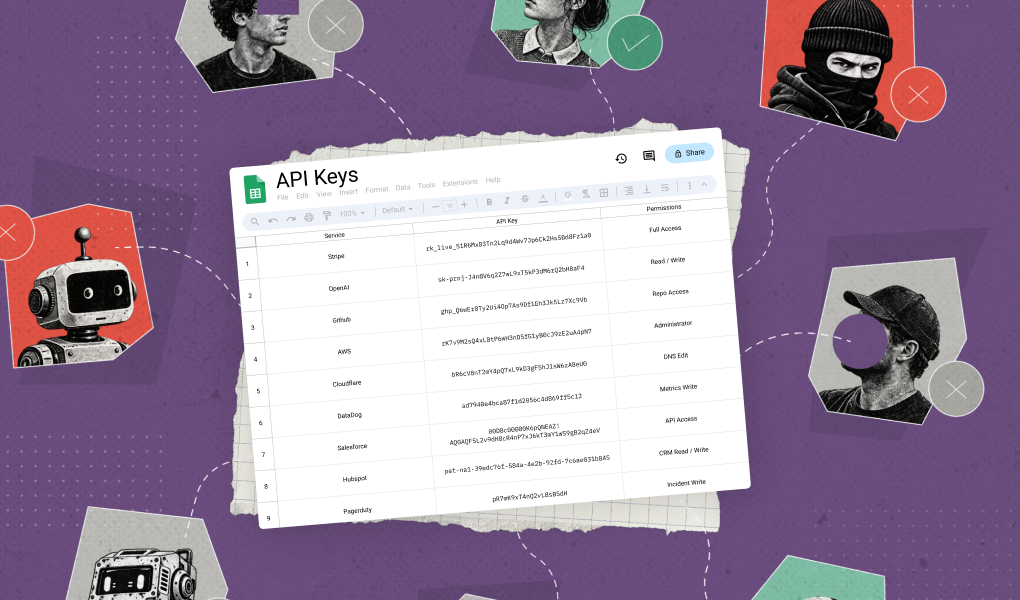



Modern security demands organizations stop relying on perimeter blocking and adopt a richer vocabulary of proactive capabilities to manage risk dynamically inside collaborative cloud environments.
For decades, the foundation of security architecture was a simple, declarative verb: block.
We built our defenses like fortresses. We had a strong perimeter with as few entrances as possible and a clear mandate to block anything that looked malicious from ever getting inside. The firewall, the secure email gateway (SEG), the web proxy: these were the gatekeepers. Their job was to inspect traffic, identify threats, and deny entry to anything suspicious. And for a world of on-premise servers and well-defined perimeters, this castle-and-moat approach worked reasonably well.
But that world is gone.
Today’s critical infrastructure is the cloud workspace: the sprawling, collaborative ecosystems of Google Workspace and Microsoft 365. The perimeter is wherever your employees, users, partners, and vendors are working. Data is created, shared, and accessed from anywhere, on any device. Today’s most dangerous threats often aren’t malware payloads, but expertly crafted phishing emails, compromised partner accounts, and insiders simply making mistakes.
In this environment, "block" is still a necessary verb, but it’s not enough by itself. Stacking more blocking tools on top of each other just builds a taller wall around a castle that has a thousand unlocked doors. The answer isn’t more tools. It’s a richer vocabulary.
The limits of an outdated security strategy
The instinctive reaction to new threats has been to buy more nouns: a new gateway, another agent, a separate analysis platform. This leads to a familiar set of problems:
- Tool Sprawl: Each new tool adds another dashboard to watch, another set of alerts to triage, another agent to manage: complexity becomes its own risk.
- Alert Fatigue: More tools mean more noise. Security teams spend their days babysitting tools rather than managing risk. Chasing low-fidelity alerts across disconnected systems distracts from focusing on the genuine issues and vulnerabilities that matter.
- Gaps in Visibility: Siloed signals are potential missed threats. The email gateway doesn't know what the file security tool knows, and neither of them has context from the identity provider.
An attacker moving laterally through your cloud workspace can exploit these blind spots and more with ease.
This approach fails because it's still obsessed with the perimeter. It can’t effectively answer the questions that define modern risk: What sensitive data exists in our environment, and who has access to it? Which users have access to other critical apps and systems, and how is that access managed? What happens after a user clicks a phishing link and their account is compromised?
Expanding your security vocabulary
A modern security strategy requires a new set of verbs—a suite of actions that can be taken inside your cloud workspace, not just at its edge. It’s about moving from a passive, binary allow/block decision to a dynamic, responsive set of controls.
Instead of solely trying to block threats, what if you could also:
- Detect risk proactively. This means seeing more than just malware. It's about finding sensitive data—like credentials, financial information, and PII—wherever it lives in emails and files. It's about spotting risky configurations and anomalous user behavior before they can be exploited.
- Classify your data automatically. You can't protect what you don't understand. A modern platform should be able to intelligently classify the data in your workspace, giving you a clear picture of your sensitive data footprint without manual effort.
- Protect data at rest. When a sensitive email is delivered or a file is created, what happens next? Instead of leaving it exposed, you should be able to automatically apply controls, like redacting or encrypting sensitive content on-the-fly and automatically revoking risky permissions to limit the blast radius of a potential breach.
- Triage incoming threats with intelligence. Many user-reported phishing messages are just spam. A modern system should be able to automatically analyze reported messages, surface the truly dangerous ones, and handle the noise so your team doesn't have to.
- Remediate automatically or with a single click. When a threat is confirmed, the response should be swift and comprehensive. Don’t just delete one malicious email; find every copy across every inbox and pull them all back. Don’t just identify an overshared file; fix its permissions instantly and intelligently, without adding friction to collaboration.
- Revoke compromised sessions. If an account is taken over, the priority is to kick the attacker out. You need the ability to instantly revoke active sessions and force re-authentication for the legitimate user, neutralizing the immediate threat.
- Govern your environment continuously. Security isn't a one-time setup. It’s about setting policies that prevent configuration drift and enforce security hygiene over time, ensuring your posture remains strong as your organization changes.
From building blocks to proactive control
This shift in language—from a single verb to a whole lexicon—represents a fundamental shift in strategy. It moves security from a reactive, perimeter-focused function to a proactive, data-centric one.
It acknowledges the reality that threats will occasionally get through, and that the most critical phase of defense happens inside your environment. By equipping your team with a broader set of actions, you empower them to neutralize threats with precision, reduce risk at its source, and manage the inherent complexity of the cloud workspace without drowning in alerts from a dozen different tools.
Stop buying more blocks. It's time to demand more verbs from your security stack.