

Material Threat Research Team:

Material tracked North Korea-linked
(DPRK) fake applicants for 12 months.
27 got as far as onboarding.

Read the findingsCollage of remote workers, DPRK-linked identities, hiring documents, and cloud files

What Material
found in one month.

Material matched known DPRK-linked email addresses and IP indicators against hiring activity at the organizations it monitors. Here is how far the suspected fake identities (“personas”) got.

Where DPRK-linked activity appeared
in the hiring process

STAGE 1
232Made contact
STAGE 2
66Reached interview or later stage
STAGE 3
4Reached onboarding
99organizations contactedCustomer environments where at least one persona made contact.
42reached an interview or offerOrganizations where at least one persona got at least that far.

Zooming out

Over 12 months

Suspected DPRK-linked identities that contacted hiring teams at organizations Material monitors.

2,429made contact
1,100reached an interview
or later
27reached onboarding

Breadth

The activity wasn’t limited
to large enterprises.

This wasn’t just happening to Material customers. Running the same indicators against Material’s own recruiting pipeline revealed DPRK personas there too.

Nobody is too small, too technical, or too careful to be a target. That’s the scale of this operation.

Remote interview with an obscured applicant identity
41%of personas appeared at more than one organization
15appeared at ten or more organizations
19organizations: the most for a single persona
18of 27onboarding personas were also in process elsewhere

Repeat identities

The same fake identities kept turning up at different companies.

Each company sees only its own pipeline. A wider view can reveal the same identity moving through several. One persona was completing onboarding paperwork at one company while pursuing seven others.

How the scheme works

How a fake employee
gets inside.

Five ordinary steps, each using the same remote-work
tools every legitimate hire goes through.

  1. Illustration of a fake applicant working on a laptop
    01

    Apply

    Operatives apply for remote roles using fake identities and email addresses tied to DPRK-linked infrastructure.

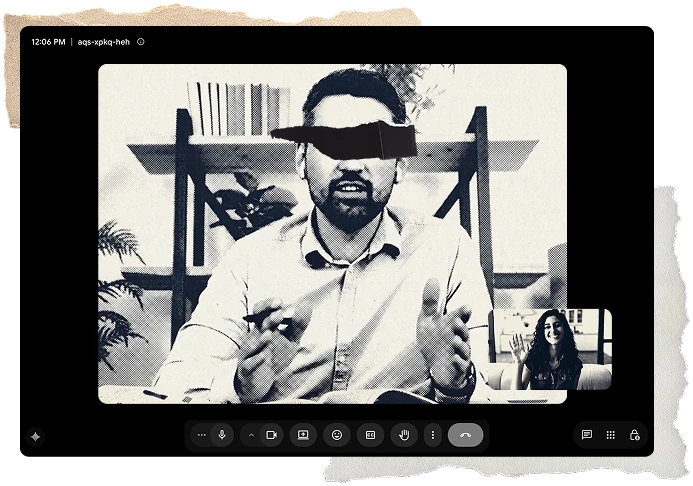
  2. Video interview with an obscured applicant identity
    02

    Pass the interview

    They interview over video like any other remote candidate, presenting the same persona at every stage.

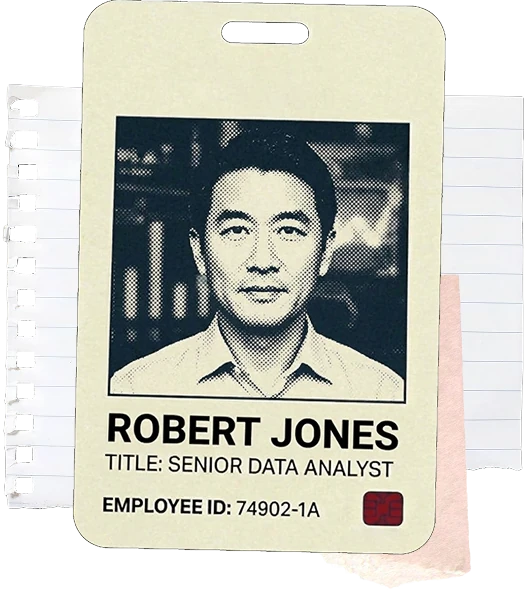
  3. Illustrative employee badge for the Robert Jones persona
    03

    Get hired

    To the employer, the candidate can look like a capable remote employee.

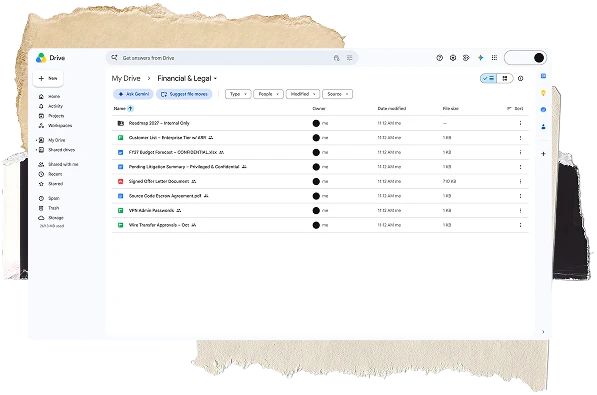
  4. Cloud drive containing company documents accessible to an employee
    04

    Get access

    Once hired, they receive access to company systems, applications, files, and other cloud resources.

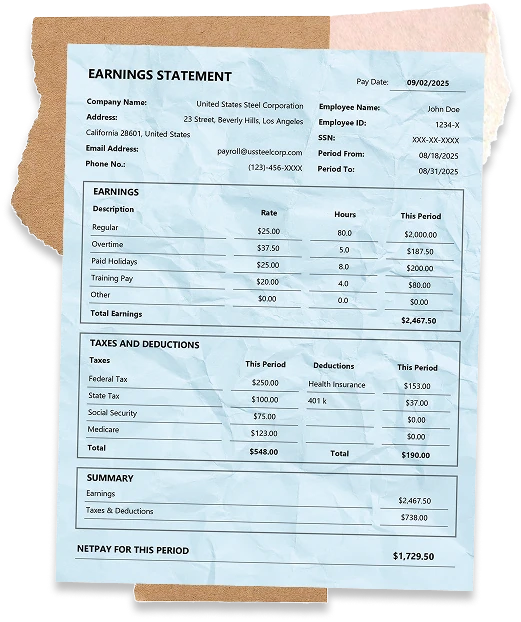
  5. Illustrative earnings statement for a fake employee
    05

    Get paid

    The goal may be the paycheck itself, with wages routed back to the DPRK regime. Data theft isn’t always required.

They may seem like
model employees.

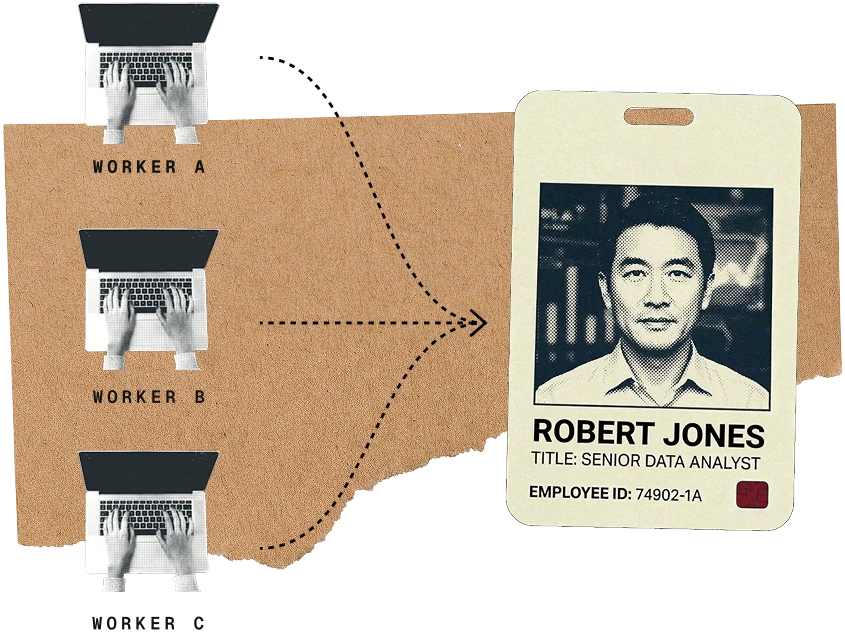
Because multiple people can operate behind one identity, the worker may appear unusually productive, responsive, or technically capable.

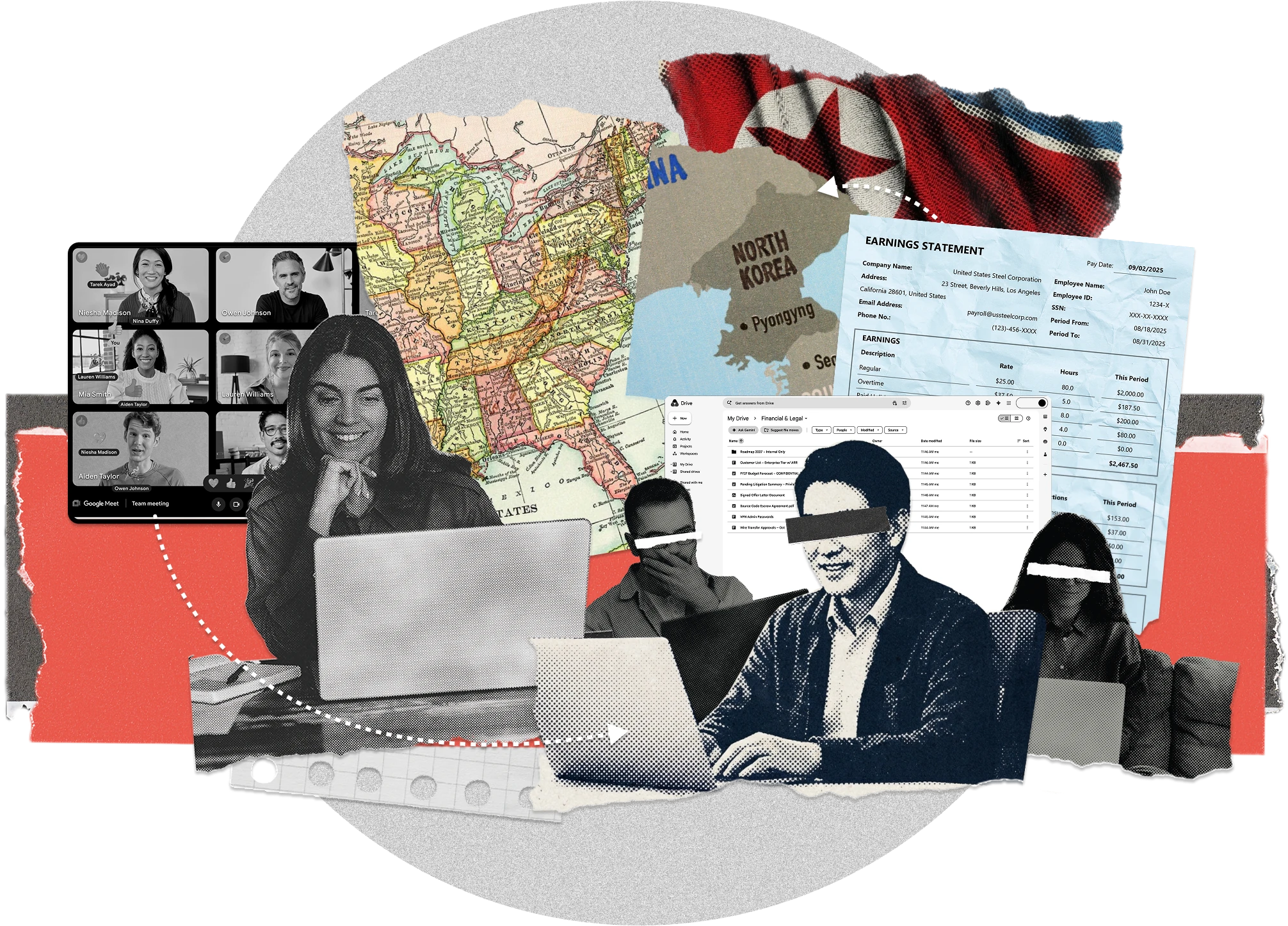
Some operatives may never exfiltrate data or trigger an obvious security event. Their goal may simply be to keep the job and collect the paycheck, but risk is present as long as the employee has access to systems.

Three workers operating behind a single employee identity

Getting hired is
only the beginning.

Email can be the entry point, but once a fake employee is onboarded, the risk extends across the cloud workspace.

Their identity may now have access to shared drives, calendars, connected applications, files, permissions, and sensitive company data.

Read the threat research blog

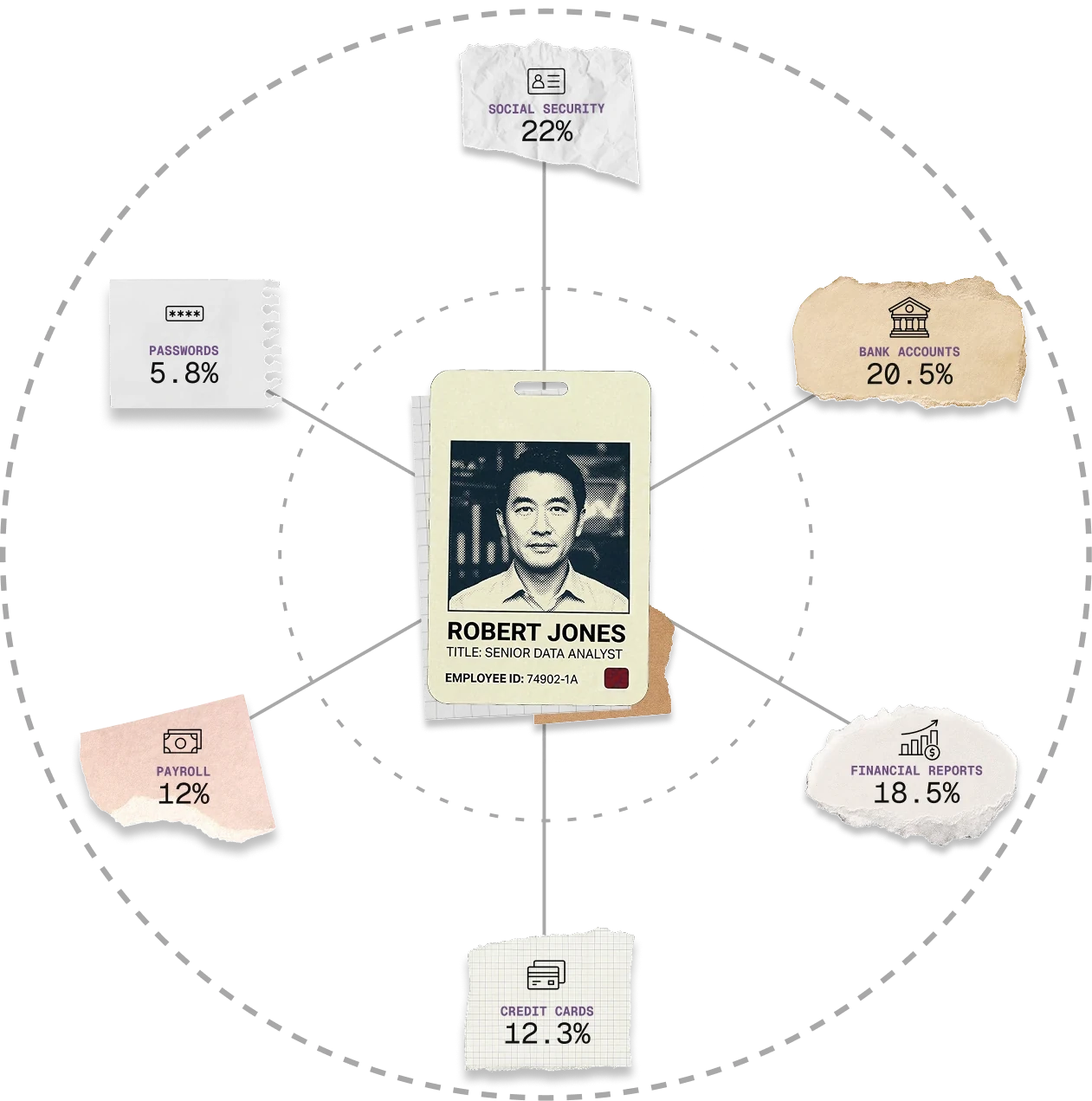
A fake employee can access
everything the employee identity
is connected to.

Fake employee identity connected to sensitive data: Social Security 22%, bank accounts 20.5%, financial reports 18.5%, credit cards 12.3%, payroll 12%, and passwords 5.8%.Blast radius

Sensitive files across organizations
where a persona reached onboarding,
last 12 months

95Mfiles containing source code (15M at a single organization)
1.4Mfinancial reports
800Kfiles with bank / routing numbers
700Kfiles with Social Security numbers

Volume is only half the picture. The question that decides the risk is access: who can reach these files, how widely they’re shared, and how much a new account could open without anyone approving it.

Four organizations where a persona
reached onboarding in one month

Real Organization #1
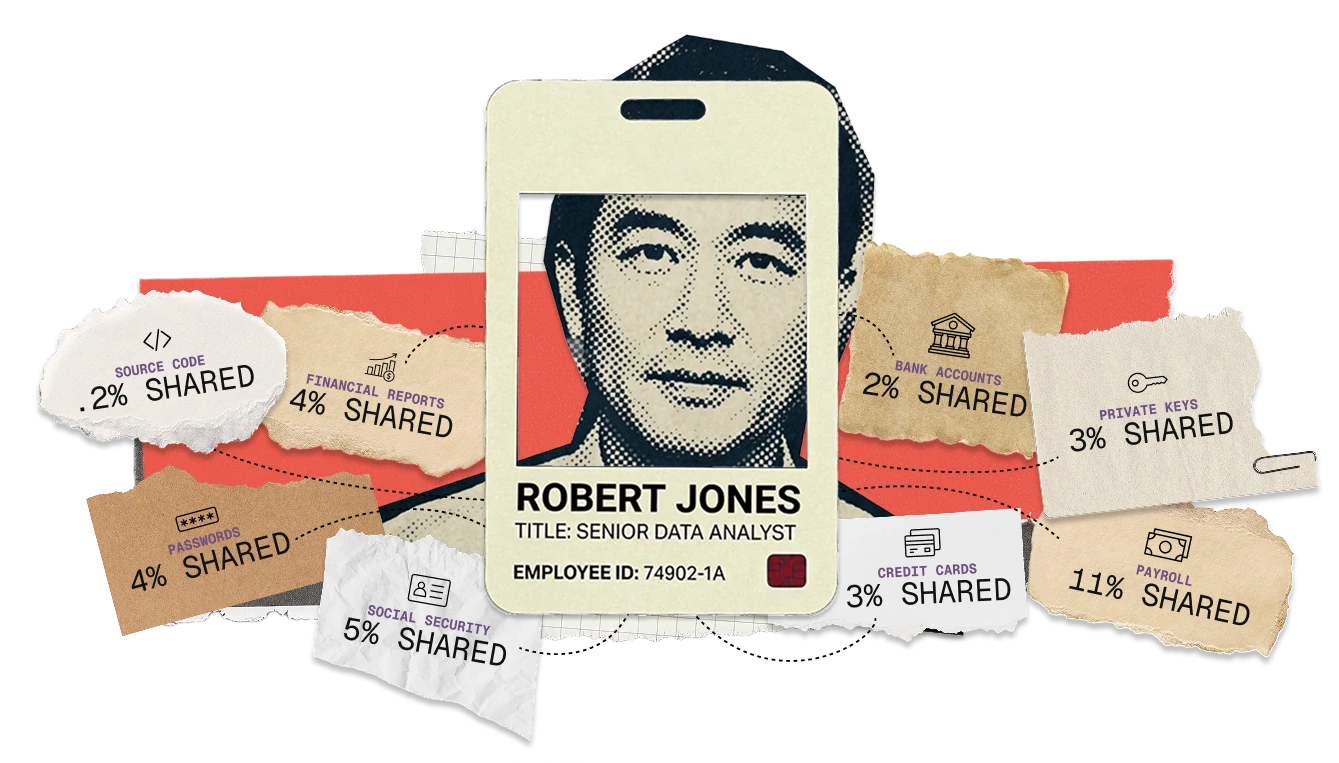
Organization 1: Robert Jones persona surrounded by file-sharing exposure figures

Tightly held

Roughly 15 million files flagged as source code and about 130,000 flagged with bank or routing numbers. Access here was comparatively tight: these files were held closely, shared with almost no one beyond their owners, which is the posture the other environments should be measured against. The first access question is which repositories and files the new role would receive.
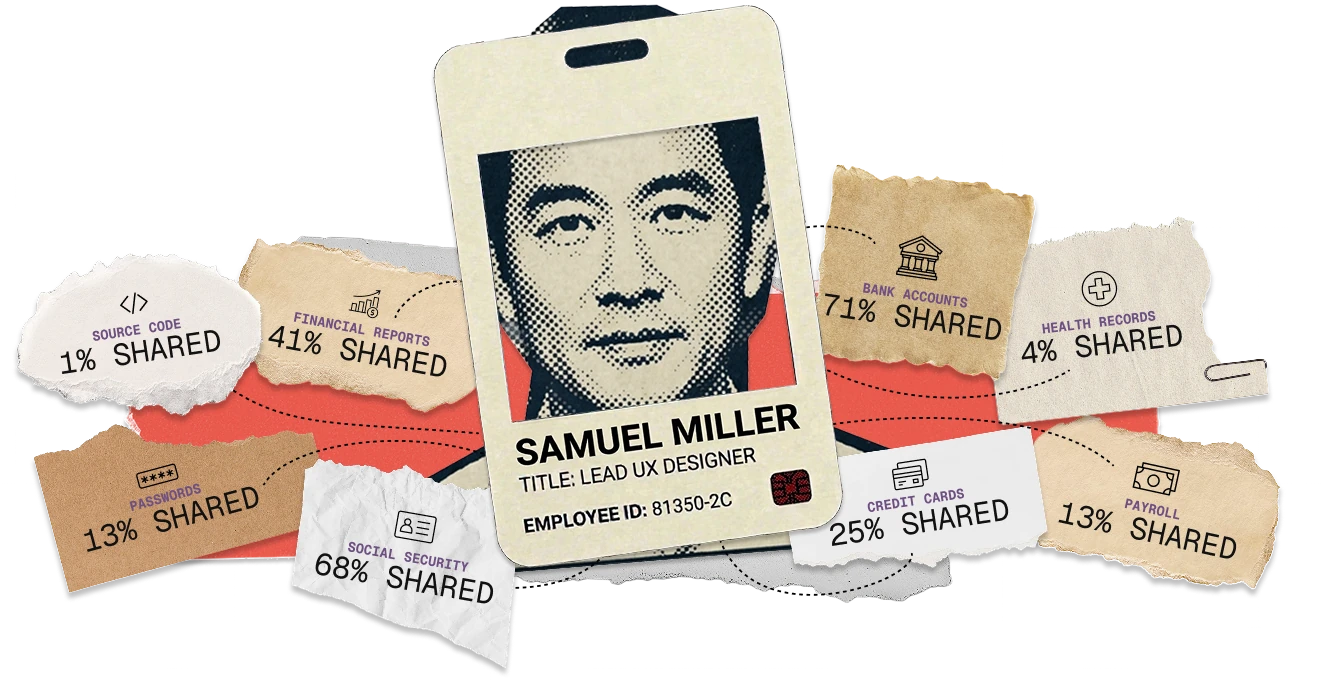
Real Organization #2

Organization 2: Samuel Miller persona surrounded by file-sharing exposure figures

Open to the whole company

Around 400,000 files flagged as containing Social Security numbers, 345,000 with bank or routing numbers, and several million source-code files. And the exposure was not hypothetical: 68% of those Social Security files, about 277,000, and 71% of the bank and routing files, about 248,000, were shared company-wide or by public link, reachable by any account inside the organization with no special permission. An insider would not have to reach for this data; it was already open.

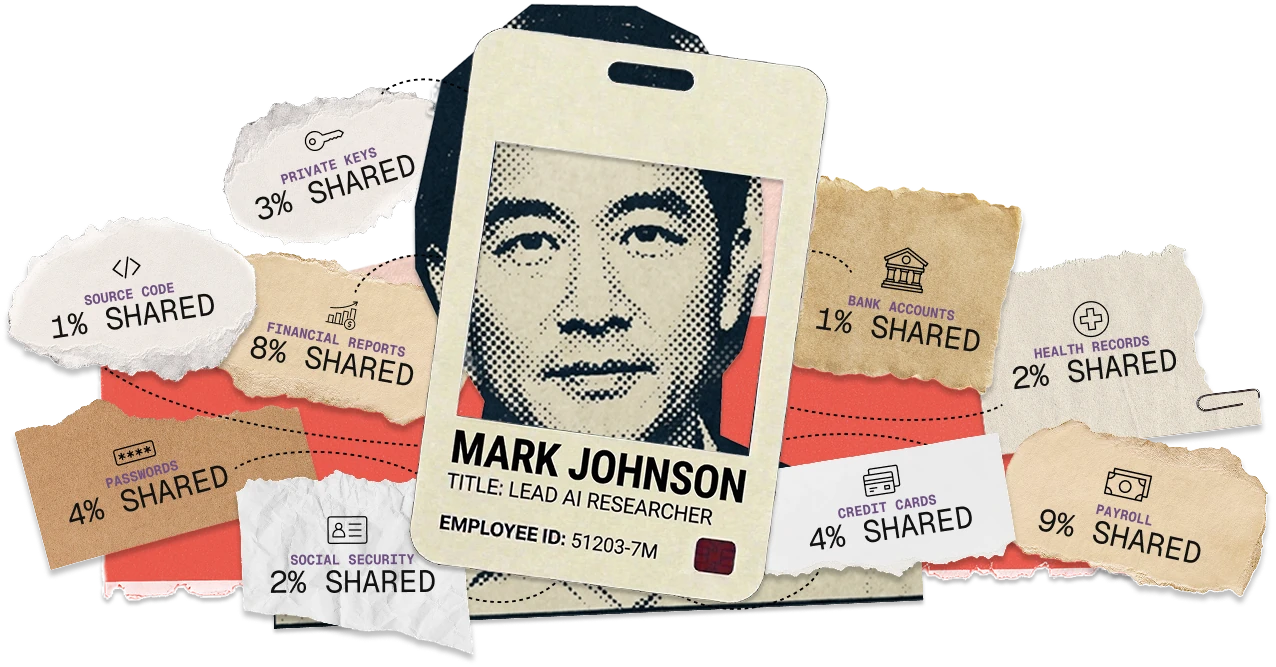
Real Organization #3

Organization 3: Mark Johnson persona surrounded by file-sharing exposure figures

Millions of files, thousands public

About 14 million source-code files, of which roughly 1,900 were shared by public link, readable by anyone with the URL. At that scale, even a tiny fraction left openly shared is a meaningful amount of code.

Real Organization #4

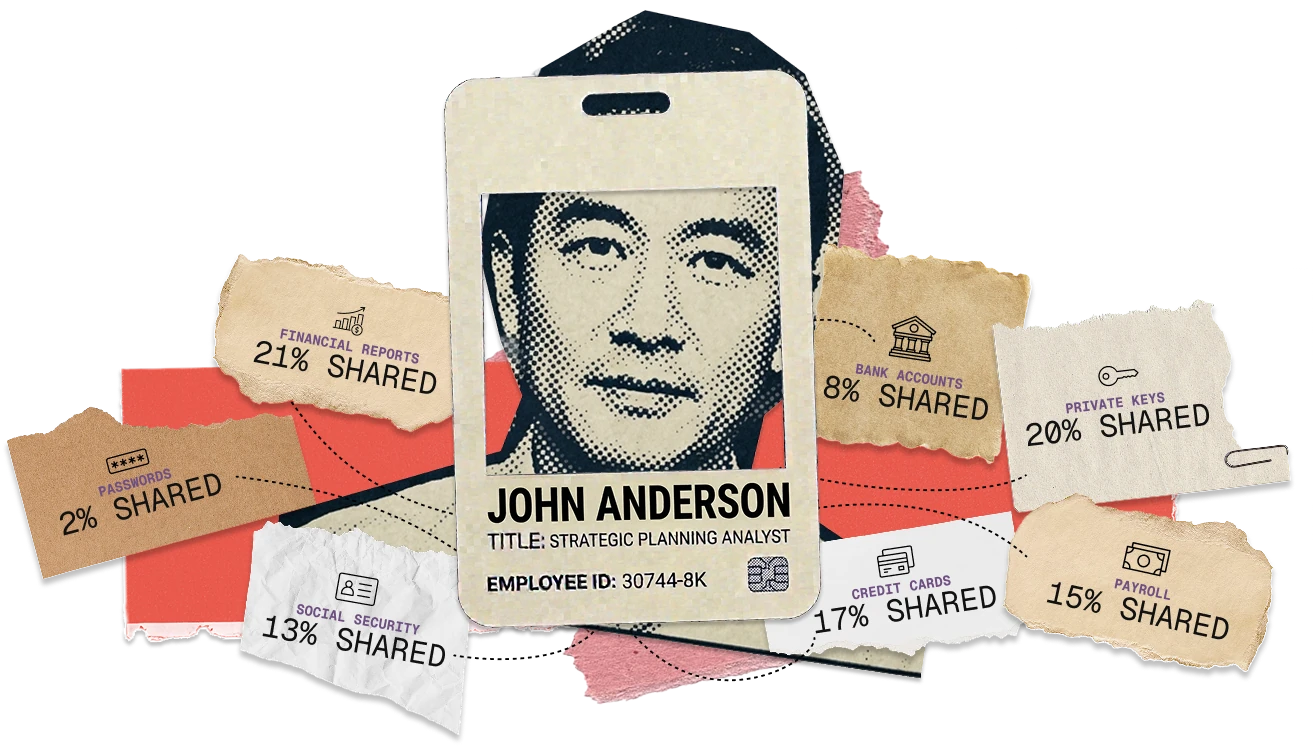
Organization 4: John Anderson persona surrounded by file-sharing exposure figures

Smallest, still exposed

Roughly 1.5 million source-code files and files flagged as containing private cryptographic keys. Even here the sharing had drifted: about 21% of its financial files and 17% of its credit-card files were shared company-wide or by public link. The smallest of the four environments still held material worth investigating closely.

Protect the workspace
behind the inbox.

From sensitive files in Google Drive to OAuth apps and AI agents, we find what an attacker or insider can reach, investigate who has access, and fix risky access automatically.

Privacy Preference Center

By clicking “Accept”, you agree to the storing of cookies on your device to enhance site navigation, analyze site usage, and assist in our marketing efforts. View our Privacy Policy for more information.

New