


Endpoint and network security are converging, but the workspace remains a security gap.
For two decades, security teams organized their work around three domains: the endpoint, the network, and the cloud application layer. Each got its own tools, vendors, and budget line.
CrowdStrike's announced acquisition of Zscaler signals where the market is headed. Endpoint protection and network security, once sold as separate categories, are converging into a single platform that sees a user's device, connection, and access to resources as one continuous picture. An attacker doesn't respect the boundary between a laptop and a network tunnel, and defenders shouldn't have to stitch together evidence from two consoles.
But the convergence is incomplete, and the gap that remains matters more than most people realize.
The Workspace: Where the work actually happens
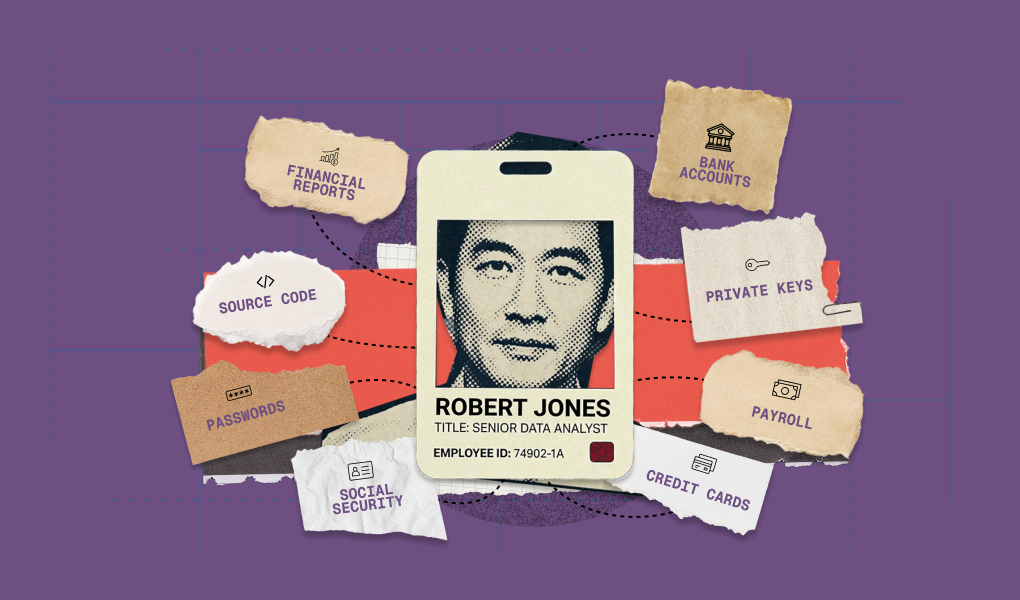
Look at where your employees spend their working day. It isn't on a device in isolation, and it isn't only on a network. It's in the email, documents, shared drives, chat, and calendars inside Google Workspace and Microsoft 365, along with the growing web of connected third-party apps. Sensitive data flows through these systems constantly, and most of it never touches the network path a secure web gateway inspects.
The same thing applies to endpoint security. A file shared by link, an email forwarded to a personal address, an OAuth grant to a third-party app with broad read access, and a shared drive quietly exposed to "anyone with the link" aren’t events happening on an endpoint. They are workspace events. The data moves through sanctioned, authenticated, encrypted channels, and it still leaves the organization.
This is the gap. The endpoint and the network are consolidating into a unified security posture. The workspace, where the most valuable business data now lives, has largely been left to native admin consoles, compliance checkboxes, and a patchwork of point tools never designed to reason about the full lifecycle of a document or message.
Why native controls aren't enough to secure the workspace
Google and Microsoft have invested heavily in security for their platforms, and their built-in controls are real. But they serve a general audience and reflect the trade-offs of platforms that must work for everyone. They show you what happened. They rarely tell you what it means or what to do about it at the speed a modern threat requires.
Security teams are asking questions that are hard to answer from inside a native admin console. Which of our sensitive documents are overexposed right now, and to whom? Which third-party apps can reach our data, and have their permissions quietly expanded? Did an account that just downloaded a large volume of files behave like the employee it claims to be? Answering these requires context across identity, content, sharing, and behavior, and it requires acting on that context, not just logging it.
The agentic workspace raises the stakes
The problem is getting more urgent. The workspace is becoming agentic. AI assistants, automations, and connected agents now read, write, summarize, and share content on behalf of users, often with delegated permissions nobody has fully reviewed. An agent with access to a mailbox and a document library can do in seconds what used to take a determined insider hours. The attack surface now includes every agent and integration acting in the user's name.
Securing that environment means treating the workspace as a first-class security domain, with its own visibility, policy, and response. It means knowing which agents and apps are acting, what they are allowed to touch, and whether their behavior still matches what was intended. Because endpoint and network controls can't see this layer, it has to be addressed directly.
The next step in securing the workspace
We think the market will organize around key layers of protection that reflect where risk lives: the endpoint, the network, and the workspace. The first two are consolidating, which is good news for defenders who have been drowning in tools. The third needs a dedicated answer, built for the data and identity model of Google Workspace and Microsoft 365 and for the agents now operating inside them.
That is the gap Material Security exists to fill. We built our platform to give security teams continuous visibility into their workspace, to detect and respond to threats across email, files, and connected apps, and to bring control to the agentic layer as it grows. We think of it as the missing piece that completes the picture the endpoint and network platforms are drawing.
Consolidation in our industry shows that security leaders have recognized the cost of fragmentation. The workspace is where that fragmentation is most expensive, because it is where the data lives.
Ready to secure the workspace? Contact us for a demo.