

The workspace attack chain has evolved. If your security strategy ends at the inbox, it has a critical gap where both modern attackers and AI agents operate.
A version of this post first appeared on Bleeping Computer
The Threat Has Shifted
For years, the dominant security model was straightforward: email is the danger zone and if you can just block attacks there, then everything else is relatively safe. Defend the inbox, and you defend the workspace.
This model assumed attackers follow a predictable path:
- Email is the entry point: phishing, credential theft, account takeover
- Data access follows: once in the inbox, attackers read Gmail and move on to Drive
- Lateral movement begins: password resets and magic links open additional systems
- Persistence is established: data exfiltration takes place across systems
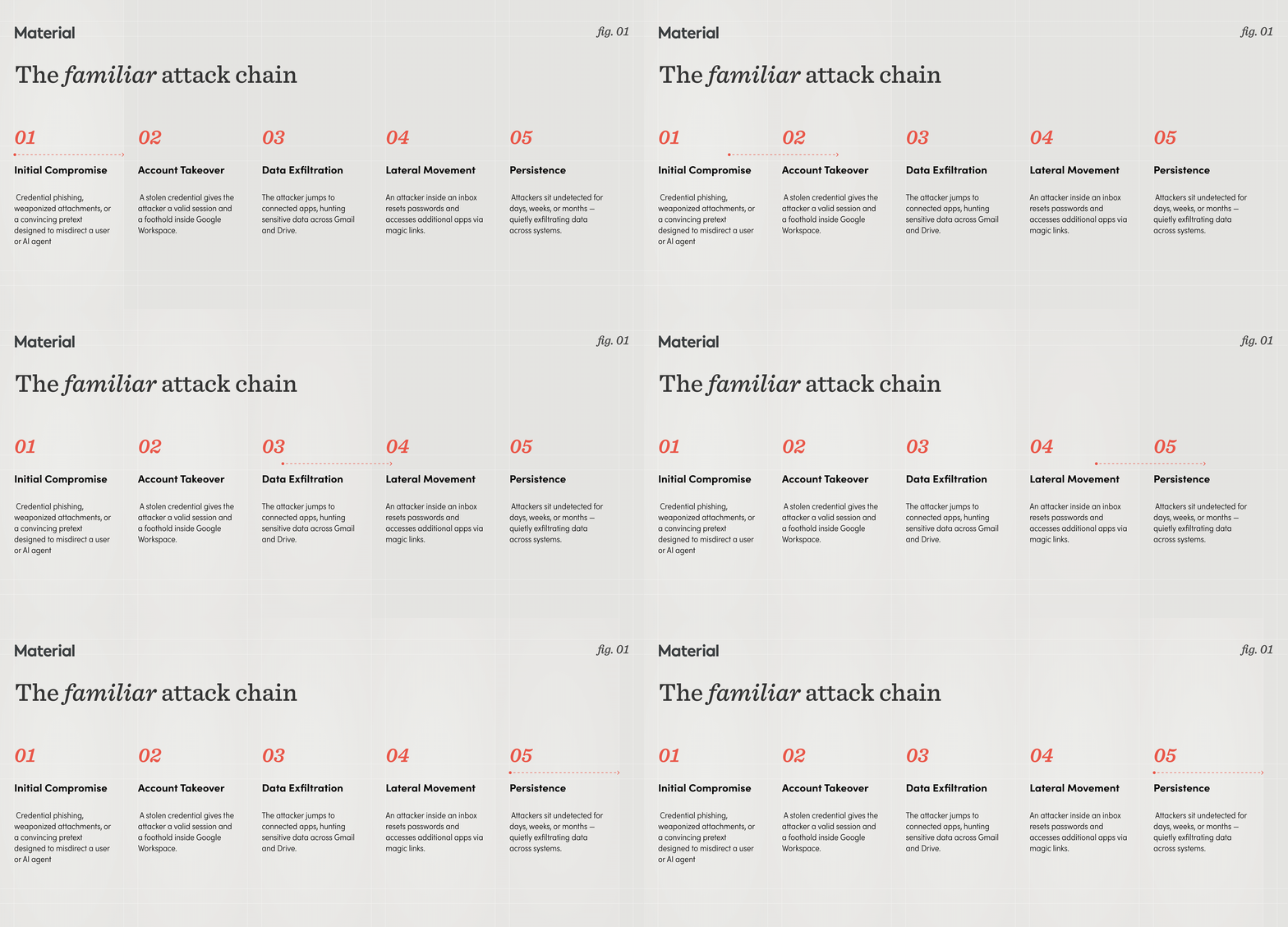
This sequence is still valid. But attackers have rearranged the steps of the attack chain.
The OAuth Entry Point
Recent high-profile incidents (Vercel, Composio, and others we're tracking) reveal a pattern: OAuth tokens are becoming the first entry point into Google Workspace, and email breaches happen downstream of that initial access.
Here's how this attack chain unfolds:
- OAuth is compromised: A supplier is breached, or a trusted integration is compromised. An OAuth token is stolen. These tokens are particularly dangerous because they:
- Survive password resets
- Don't expire unless explicitly revoked
- Are largely invisible to users and traditional security monitoring
- Represent a supply chain attack vector into your environment
- Sensitive data is accessed: Using the stolen token, attackers access Gmail and Drive directly, bypassing identity-based entry altogether.
- Account takeover follows: With visibility into email and stored credentials, attackers can execute a full account takeover, gaining persistent access far beyond what the initial OAuth grant provided.
- Lateral movement accelerates: Credentials discovered in Drive, password reset links in email, and magic link authentication become pathways into additional systems and data.
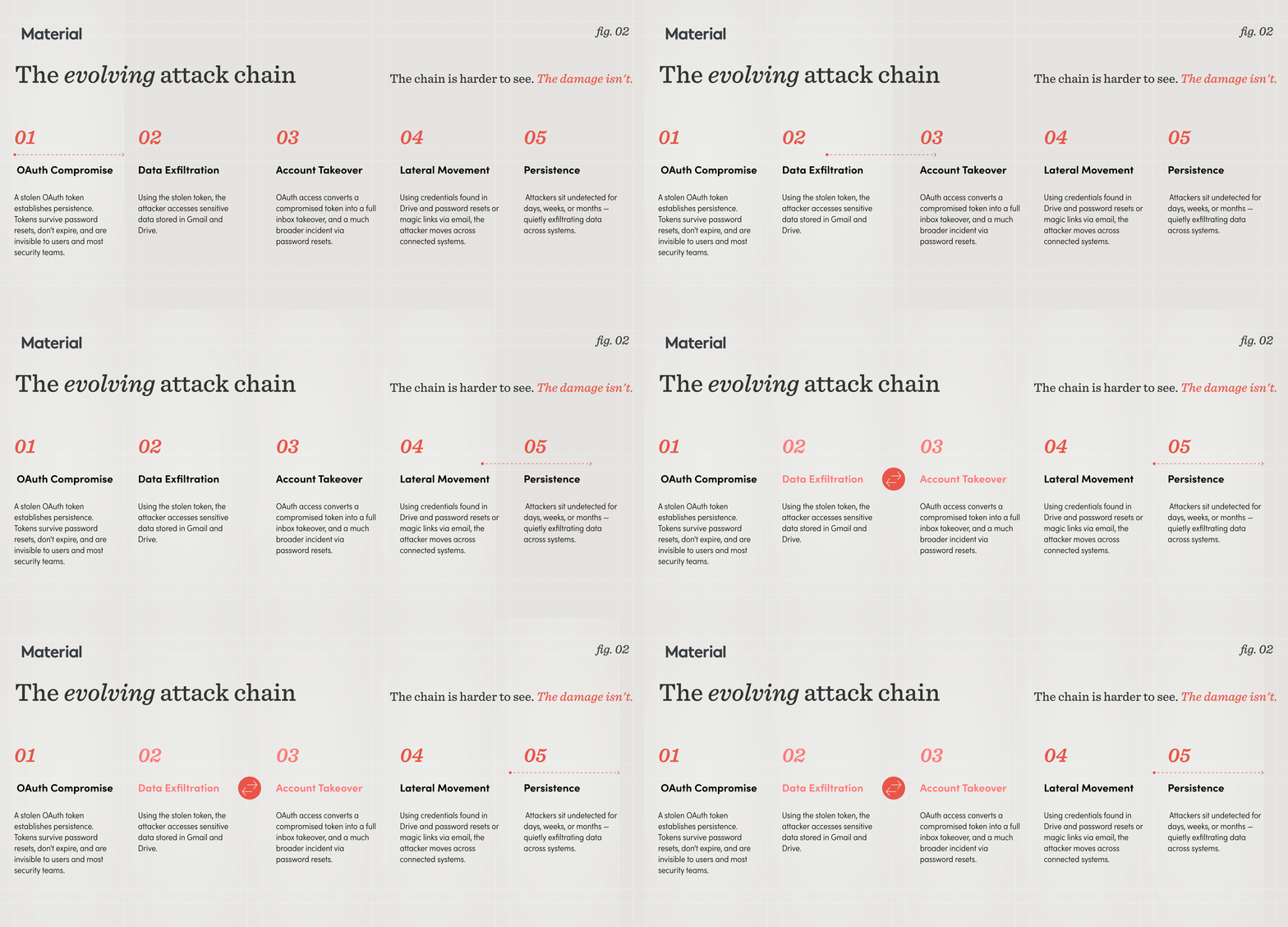
The building blocks of the attack chain remain the same. It’s the sequence that has flipped.
The Uncomfortable Parallel
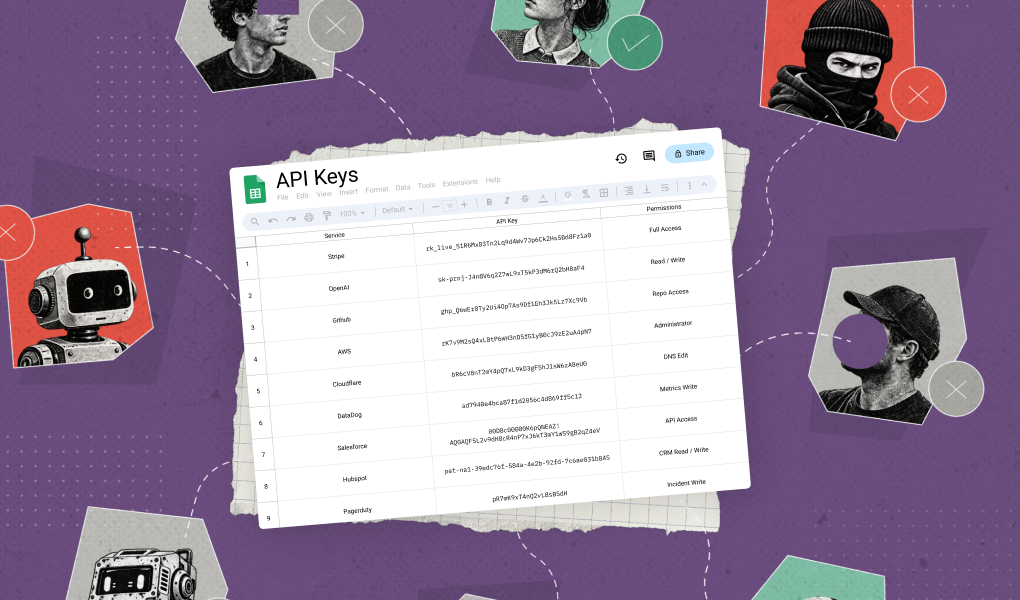
This is where the conversation becomes complex, because the OAuth-centric attack chain doesn’t just describe what attackers do. It increasingly describes what AI agents do, by design, every single day.
Your employees are connecting AI agents to Google Workspace right now. Those connections are legitimate. The OAuth grants are authorized. The agents are reading email, searching Drive, and taking actions on behalf of real users. In most organizations, this is happening faster than security teams can discover it.
When an AI agent behaves unexpectedly due to ambiguous instructions, unanticipated reasoning chains, or prompts encountered in the environment itself, it can traverse the same path as an attacker:
- It accesses data beyond its intended scope. The OAuth grant is broad; the task is narrow. The agent reads inbox content it wasn't supposed to reach.
- It encounters and acts on sensitive information. Credentials in email threads. Confidential documents in shared drives. The agent makes use of that information to complete its task.
- It takes downstream actions. Sending messages, following links, making requests to connected services.
- It asks for access to other systems. The agent moves laterally across third-party systems and uses all the context it’s accumulated as it goes.
The difference is there was no malicious actor and no compromised credential. Just an agent operating exactly as it was designed to operate, in an environment where the guardrails weren't built with that kind of actor in mind.
What This Means for Defense
Most AI agent security discussions focus on prompt injection, red-teaming, and application governance. Those are real problems. But the threat I'm describing is different: it's not about an agent being weaponized. It's about an agent operating within its design parameters in an environment that never anticipated it as a first-class actor.
A human operator who is overpermissioned generally understands company norms well enough to navigate that situation. An AI agent doesn't. It will simply execute its task using whatever access it has available.
This distinction matters because it shifts where the control problem actually lives. The controls that defend against this risk aren't controls on the agent. They're controls on the environment the agent operates in.
Controls That Matter
Visibility into sensitive data. If you know where sensitive data lives across email and Drive, you can enforce access policies before an agent (or attacker) reaches it. This means:
- Identifying which shared files have overly broad access
- Discovering email threads containing credentials or PII
- Mapping Drive content exposed beyond their intended audience
OAuth behavior monitoring. Understanding what apps exist and what scopes they hold is the minimum. You need visibility into what those apps actually do: what data they read, when they read it, how behavior changes over time. Whether an OAuth token is being used by an attacker or an AI agent operating outside its intended parameters, anomalous activity surfaces the danger.
Blocking lateral movement mechanisms. Password reset links and magic links are powerful pivoting tools. If sensitive message content can be redacted and access to it gated behind step-up verification, that pathway collapses for both attackers and errant agents alike.
Threat detection across the chain. Email security catches the phishing payloads that bypass reputation filters. OAuth monitoring detects suspicious application behavior. Data visibility prevents overpermissioned access. But these controls need to connect the dots across the entire chain. The risk emerges not from any single step, but from the sequence.
Defending Against an Evolved Threat
Attackers equipped with AI tools to identify vulnerabilities and scale attacks will continue to recombine the building blocks of the workspace attack chain in new ways. OAuth-centric attacks are one example. There will be others.
The same control framework that defends against the modern attacker also defends against the modern agent risk. They're the same problem, wearing different masks.
The right approach isn't to restrict AI adoption or add point solutions at each stage of the chain. It's to build coverage that understands the attack chain as a chain, that can see what's happening across email, OAuth, Drive, and account behavior, and surface the pattern before step three or four unfolds.
If your Google Workspace security strategy ends at the inbox, it has a gap. That gap is exactly where the modern attack chain runs, and it's exactly where an AI agent operating outside its intended scope will run too.
The question isn't whether you should defend against these risks. The question is whether you can see them coming.